Complete guide to studying in Slovakia
Everything you need to know about becoming an international student in Slovakia
Five top reasons to study in Slovakia
Slovakia is increasingly becoming a hidden gem for international students seeking strong academics in a welcoming and affordable environment. Five top reasons include:
- A safe, peaceful and friendly country at the heart of Europe
- High-quality universities with respected programmes in medicine, sciences and engineering
- Attractive tuition fees and comparatively low living costs
- A relaxed lifestyle with beautiful natural scenery and easy access to major European cities
- A growing international student community, especially in larger cities like Bratislava and Košice
A quick introduction to Slovakia
Slovakia is a landlocked Central European country bordered by Austria, the Czech Republic, Poland, Ukraine and Hungary. As part of the European Union and the Schengen Area, it offers excellent mobility for students who wish to explore Europe during their studies.
Over the past decade, Slovakia has steadily attracted more international students thanks to its calm way of life, high education standards and affordability. The country is known for its mix of modern cities, medieval architecture, mountain landscapes and rich cultural traditions.
Slovakia’s main student populations come from EU neighbours, particularly the Czech Republic, Germany, Poland and Hungary. Outside the EU, the largest groups typically include students from Ukraine, Serbia, India and the Middle East, many choosing Slovakia for competitive medical programmes taught in English.
Articles related to studying in SlovakiaSlovakia’s higher education system
Slovakia follows the three-cycle degree structure used throughout the European Higher Education Area (EHEA). This ensures that bachelor’s, master’s and doctoral qualifications are recognised across Europe.
Higher education institutions fall into three main categories:
Public universities
These form the backbone of Slovak higher education and cover a broad range of subjects. Public universities focus strongly on academic teaching and research. Well-known examples include:
- Comenius University in Bratislava
- Slovak University of Technology (STU)
- Pavol Jozef Šafárik University in Košice
State universities
These are specialised institutions overseen by particular ministries, for example, the Academy of Police Forces or the Armed Forces Academy. They tend to focus on security, defence and professional training.
Private universities
Slovakia also has several private institutions offering business, IT and social sciences programmes, often with a strong international outlook and smaller class sizes.
Many universities now offer full degree programmes in English, particularly in medicine, engineering and business.
Climate
Slovakia experiences four distinct seasons. Winters are cold and snowy, especially in the mountains, while summers are warm and sunny without extreme heat.
Expect temperatures around -5°C to 5°C in winter and 20°C to 30°C in summer, depending on the region. Spring and autumn are mild and colourful, making them popular times for travel and outdoor activities.
Students arriving from warmer climates may find January and February particularly chilly, but locals embrace winter sports, skiing, snowboarding and hiking are all easily accessible.
Lifestyle and welfare
Healthcare
Slovakia has a well-developed healthcare system. If you are an EU/EEA citizen, your European Health Insurance Card (EHIC) ensures access to public healthcare under the same conditions as Slovak citizens.
Non-EU students must obtain health insurance as part of their residence permit process. Many universities help international students with recommended insurance providers.
Leisure
Slovakia offers a relaxed lifestyle with a mix of outdoor activities and cultural attractions:
- The High Tatras are perfect for weekend hikes or skiing trips.
- Historic towns like Banská Bystrica, Trnava and Nitra offer charming old streets and local festivals.
- Bratislava combines modern city life with traditional cafés, galleries and views over the Danube.
Nature lovers will enjoy Slovakia’s national parks, lakes and forests, while culture fans can explore castles, folk traditions and classical music events.
Transportation
You can travel around the country easily using trains and buses, which are affordable and frequent. Bratislava and Košice have efficient public transport systems including trams and buses.
Cycling is popular in some cities, though the infrastructure varies. Slovakia’s central location also means Vienna, Budapest and Prague are only a short train or bus ride away.
Food
Slovak cuisine is hearty and comforting, with dishes such as:
- Bryndzové halušky (potato dumplings with sheep cheese)
- Kapustnica (cabbage soup)
- Schnitzel and various roasted meats
- Delicious pastries and sweet treats
International foods are widely available, especially in bigger cities, and students will find affordable canteens on most campuses.
Safety
Slovakia is considered a safe country with low levels of violent crime. International students typically find cities calm, walkable and welcoming. Normal precautions are recommended, particularly at night or in busy transport hubs.
Sign up to our regular email updates with advice on destinations, universities, scholarships and everything you need to prepare for studying overseas.
Sign up to our free emails nowUniversity cities
Slovakia offers a range of cities, each with its own character and student culture:
Bratislava
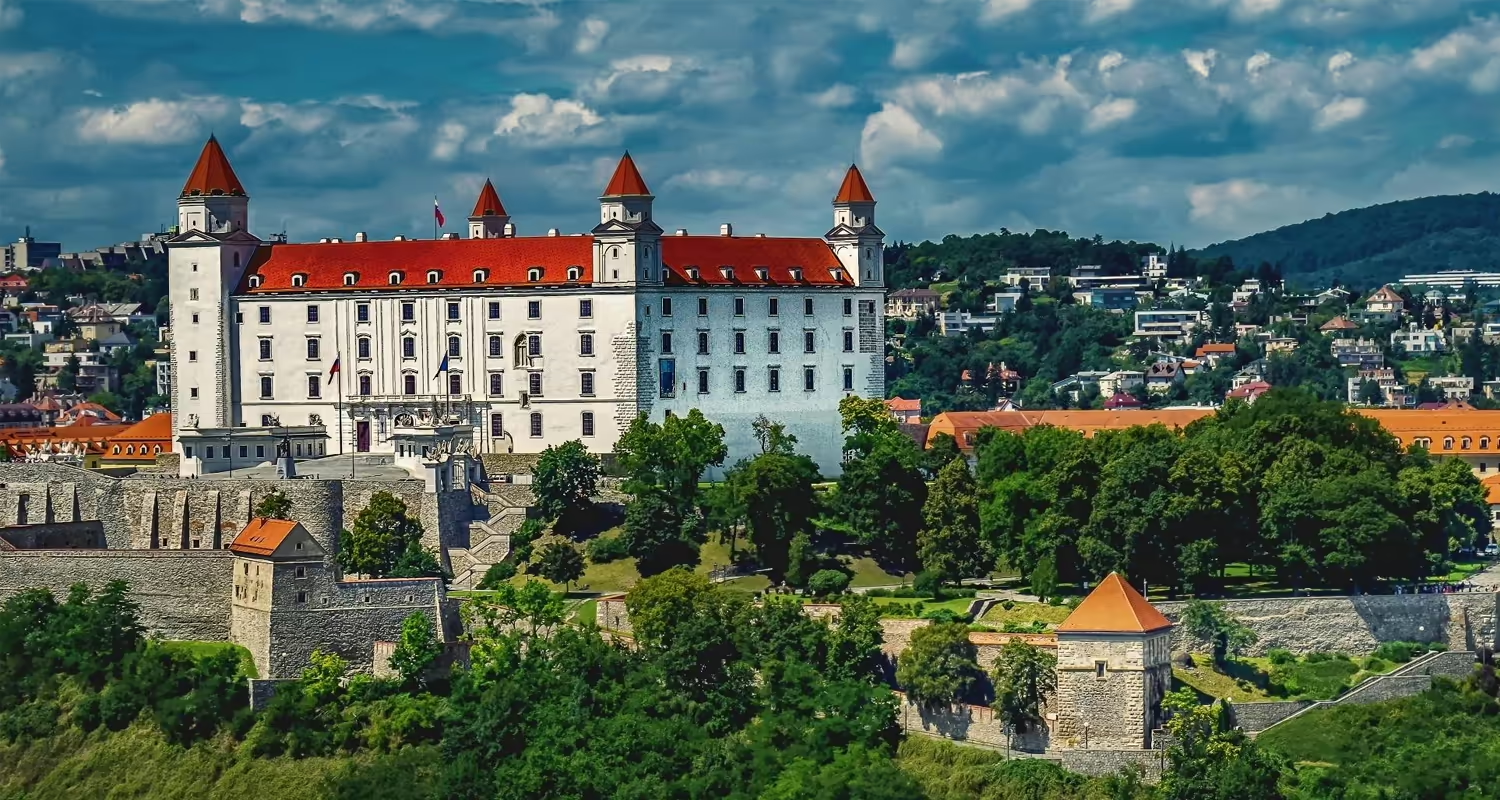
The capital and largest city, Bratislava sits on the Danube near the Austrian border. It has the highest concentration of international students, an energetic nightlife, modern universities and excellent transport links to Vienna (just one hour away).
Košice
A lively cultural centre in eastern Slovakia, known for its beautiful Old Town and strong academic presence. Pavol Jozef Šafárik University and the Technical University of Košice attract students from across Europe.
Nitra
Home to Slovak University of Agriculture and Constantine the Philosopher University, Nitra is a peaceful, student-friendly town surrounded by vineyards and hills.
Žilina
A hub for engineering and transport studies thanks to the University of Žilina. It’s close to outdoor attractions and national parks.
Banská Bystrica
A mid-sized city with a relaxed atmosphere, popular with students looking for affordability and access to nature.
Student visas
EU/EEA students do not require a visa to study in Slovakia.
Non-EU students will need:
- A temporary residence permit for study
- Proof of financial resources
- Valid health insurance
- Confirmation of enrolment from their university
Most students apply via their local Slovak embassy, though some steps are completed after arrival.
Costs of studying
Course fees
Tuition fees vary by university and programme. Public universities offer:
- Bachelor’s programmes: roughly €2,000-€5,000 per year for non-EU students
- Master’s programmes: around €2,500-€6,000 per year
- Medical programmes: higher, often €9,000-€12,000 per year
EU students often pay little or no tuition if studying in Slovak; English-taught programmes may carry higher fees.
Living costs
Slovakia remains one of the more affordable EU countries for students. You will typically spend:
- €450-€700 per month including rent, food, transport and personal expenses
- Accommodation costs vary: student dormitories are cheaper, while private flats in Bratislava cost more
Scholarships
Some universities offer scholarships for academic merit or students from specific regions. There are also national schemes such as:
- The Slovak Government Scholarship
- Erasmus+ mobility grants
How to apply to university
Applications are usually made directly through each university’s online portal. You will typically need:
- Completed application form
- Academic transcripts
- Proof of language proficiency
- Motivation letter
- Passport copy
- Application fee
Deadlines vary, but many universities accept applications from February to May for programmes starting in September.
Job prospects for international graduates
Slovakia has a growing labour market in sectors such as IT, engineering, automotive manufacturing, finance and shared service centres. Knowledge of Slovak will significantly improve your employment prospects, though some international companies operate in English.
Students from EU/EEA countries may work freely during and after studies. Non-EU graduates can apply for residence permits linked to employment.
Frequently asked questions
Is it free to study in Slovakia?
No. EU students may pay very low fees for Slovak-taught programmes, but English-taught courses and non-EU students usually pay higher tuition fees.
Am I allowed to work while I study?
Yes. International students can work part-time, though non-EU nationals may require additional permits depending on hours and contract type.