

Studying in Antwerp, living in a happy city
Antwerp appears on the 5th place in the Happy City Index 2025, an assessment based on factors such as mobility, sustainability, progressive policies and overall liveability. It is easy to see why. It is compact and walkable, well connected by public transport, and big enough to feel exciting without being overwhelming.
For prospective international students, that mix can make a real difference: studying abroad is not only about lectures and exams, but also about how you feel day to day.
In practice, this “happiness” shows up in small, practical ways: how quickly you can get around, how green and safe neighbourhoods feel, and how easy it is to settle into a new routine.
To understand what student life in Antwerp can look like, we spoke to two current international students at the University of Antwerp: Carolina (Shu-Yu) Ho and Jinyang Si. Their experiences point to a simple conclusion: feeling supported and connected is a key part of thriving here.
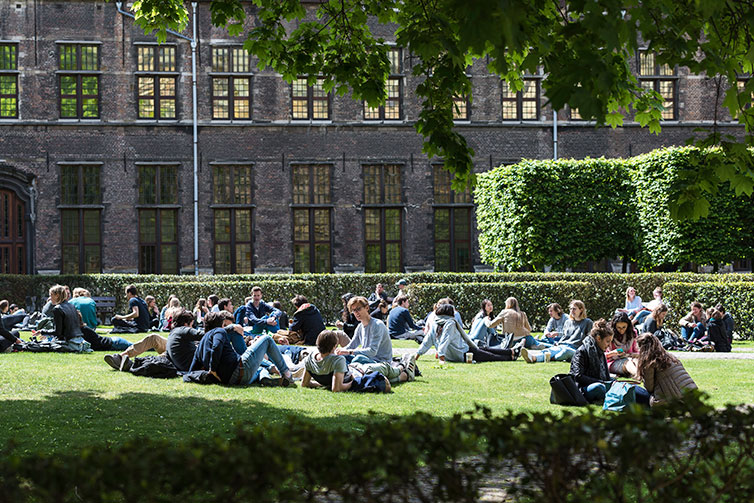
Why Antwerp works for international students
Antwerp is not a campus bubble. You study in a real European city with culture, history, and a strong international community, yet many essentials are close at hand. Students often mention:
- Easy mobility: reliable public transport and a city centre that is straightforward to navigate on foot or by bike.
- A strong sense of everyday liveability: cafés, libraries, green spaces and sports facilities are accessible without long commutes.
- A forward-looking mindset: sustainability and well-being are visible priorities in city life and at the university.
This matters because the first months abroad can be intense. When a city is easy to learn, you have more mental space for your studies and social life.

Choosing the University of Antwerp
For many students, the decision is a balance between academic fit and practical reality: language, tuition costs, and future opportunities.
Carolina, enrolled in the Master of Business Economics, chose Antwerp because she found a programme that matched her interests in marketing, while also being taught fully in English and financially realistic. She also appreciated that Belgium offers possibilities for graduates to remain in the country for a period after finishing their studies to explore work opportunities, an important factor for students thinking ahead.
Jinyang was drawn to the Financial Engineering programme and found the university’s online information clear and detailed. She also described the admissions process as surprisingly personal: speaking with the faculty helped her feel seen as an individual rather than a number.
Making friends and building routines beyond class
A “happy city” is not only about infrastructure; it is also about belonging. Both students found that extra-curricular activities were one of the fastest ways to feel connected.
Carolina joined a running group via the university’s sports subscription system, enjoying not only the training but also discovering different routes across the city with a coach and other students. She also enrolled in a Dutch course to support her longer-term plans in Belgium.
Jinyang participated in a mix of activities, from sports to city-based learning experiences, including a guided visit to the Port of Antwerp. She also attended a career-related session, which helped her understand local workplace expectations and connect with others who were thinking about the next step.

Well-being and support: what students notice most
Support services are easy to overlook when choosing a university, but they become crucial once you arrive. Carolina highlighted structured career learning sessions offered through her faculty, which help international students understand the Belgian job market and prepare for recruitment realities.
Jinyang mentioned well-being initiatives that are woven into campus life. Examples included themed well-being weeks with activities such as yoga, boxing and breathing sessions, as well as approachable staff and clear pathways to mental health support.
Practical advice if you are considering Antwerp
Both students offered advice that is especially useful if you are still in the orientation phase:
- Arrive in time to settle: give yourself a buffer before classes start so you can handle admin and get to know the city without pressure.
- Use official information early: university websites and online info sessions can answer most initial questions about programmes, housing and visas.
- Say yes to Welcome Week: it accelerates friendships and helps you feel grounded from the start.
- Build one routine outside study: a sports club, a language class or a student group can transform your experience.
If you are looking for a place where academic ambition and everyday well-being can go hand in hand, studying at UAntwerp is worth serious consideration. A supportive university environment, combined with a city designed for liveability, can make studying abroad feel genuinely enjoyable.